The Silent Goodbye: How a Century-Old Teak Giant Prepares for Its Final Harvest
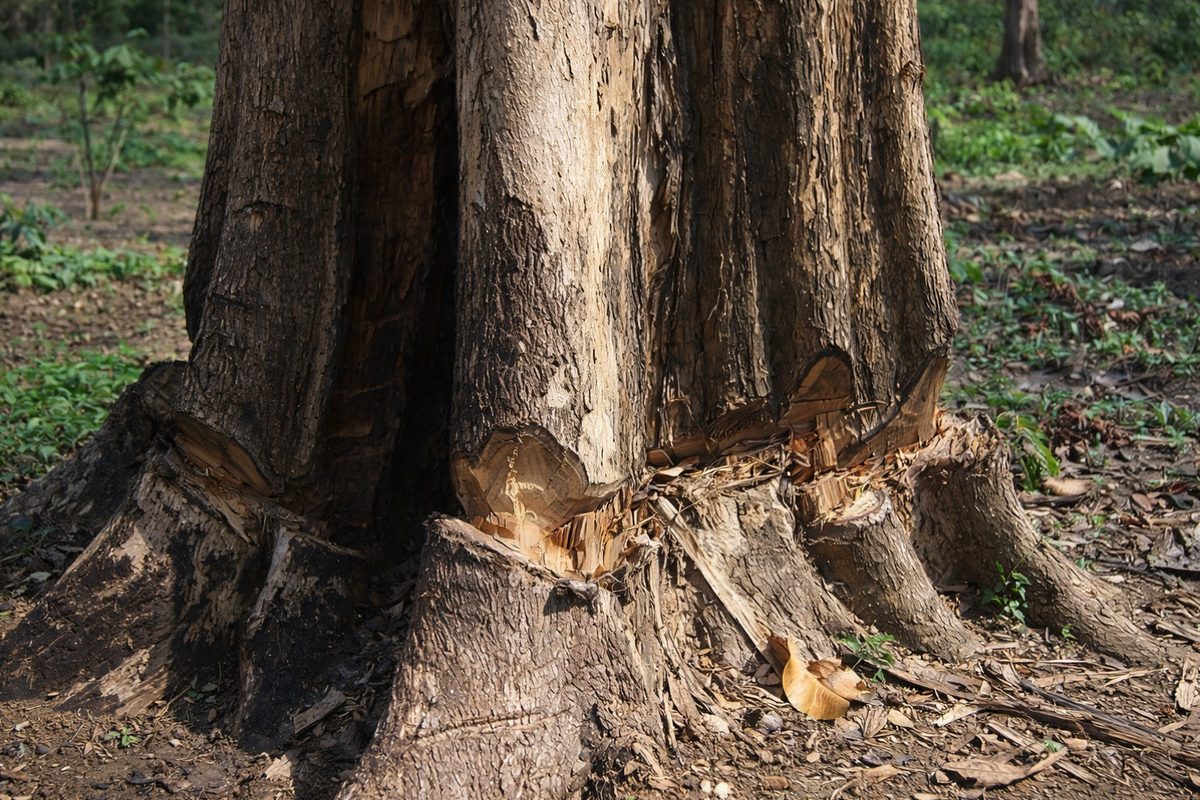
A century-old Javanese teak tree on the eve of its final harvest — the culmination of a hundred years of growth that will become GiantChess.com masterpieces carrying that heritage into homes and gardens worldwide.
The Silent Goodbye: How a Century-Old Teak Giant Prepares for Its Final Harvest
For over a hundred years, this teak tree stood as a silent witness to changing seasons, generations of farmers, and the slow rhythm of the forest. Now, deep notches ring its massive base, a traditional Javanese technique known as sanding. This is not destruction, but a deliberate, patient goodbye. The tree is being dried from within, a final ritual before its harvest.
The Art of 'Sanding'
What you see at the base of this giant is not random damage. Local loggers have carefully girdled the trunk, removing strips of bark and sapwood in a full circle around the tree. This process cuts off the flow of water and nutrients from the roots to the canopy. Slowly, over several months, the tree begins to dry while still standing. This ancient practice is done for one key reason: quality.
Why Dry It Alive?
Harvesting a living teak tree often results in wood that warps, cracks, and is prone to fungal attack as it dries unevenly. By allowing it to stand and dry for 6 to 12 months after girdling, the wood seasons naturally. The moisture content drops, the sap crystallizes, and the famed golden-brown heartwood becomes incredibly stable. The result is premium teak: denser, more durable, and resistant to termites. It is the difference between ordinary timber and heirloom-grade wood used for ship decks, high-end furniture, and temples.
A Legacy Measured in Rings
Teak from trees this old, often 80 to 120 years, cannot be rushed. The tight growth rings formed over a century create the rich grain and natural oils that make teak legendary. Each notch in its trunk is a mark of respect, a way to honor the tree’s long life by ensuring no part of it goes to waste. In Java, where teak is called jati, old-growth trees like this are considered family heritage.
The Bittersweet Cycle of Forestry
There is a quiet sadness in watching a giant like this prepare to fall. Yet, this is part of sustainable forestry. Managed teak plantations in Indonesia operate on long cycles, replanting more than they harvest. The felling of one century-old tree finances the planting of hundreds of seedlings. Its timber will likely live another hundred years as a dining table, a doorway, or the hull of a boat.
From Forest to Forever
In a few months, the canopy will brown and the leaves will fall for the last time. The forest will reclaim the sunlight it once blocked. And when the saws finally come, they will not be killing the tree, they will be completing a process the tree itself began. This is the legacy of old teak: it never truly dies. It just changes form, carrying its story into the homes and lives of the next generation.
#TeakWood
#OldGrowth
#SustainableForestry
#JavaTeak
#Woodworking
#SlowLiving
#TraditionalCraft
#NaturalMaterials
#ForestHeritage
#FromTreeToTable